
We'll see.
78th Edition - June 6th, 2026 - To-do Lists, decisions, and the illusion of choice

I sat in the virtual coaching session, staring at my laptop screen, a bit startled, and thinking about what to say next.
“You just said ‘we’ll see.’ Do you know that you say that a lot?” My coach, who I have been working with on a monthly basis for nearly two years now, stared back at me. My first instinct was to push back. I felt called out, and in that moment my need to defend was stronger than my willingness to stay curious.
I commit to things. I make decisions for a living. I show up. And yet the moment he said it, I knew he was right which explains why I bristled. He saw through my nonsense in that moment, and that never feels great. Necessary, sure, but not preferable.
We’ll see. I’ve been listening for it since, and I cannot believe how often I say it.
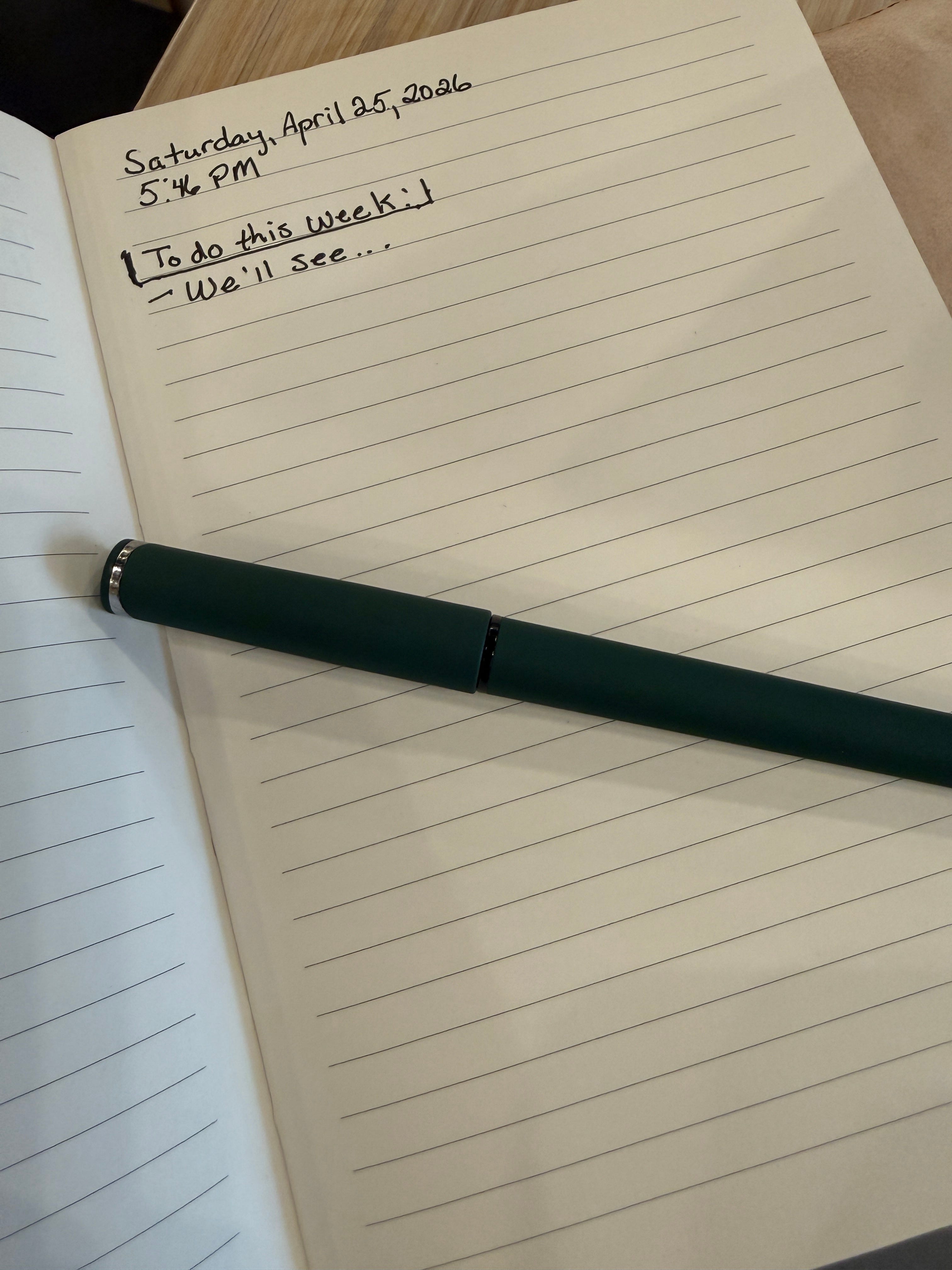
On the surface, we’ll see sounds reasonable. Some might even argue that it’s a measured, thoughtful response. It sounds like someone considerate enough not to overcommit and flexible enough to leave room for what unexpected nonsense life might throw on the path. This, it turns out, is only true if it’s used sparingly.
After that initial call out, we spent some more time breaking this down. It felt too important to gloss over. As we got into it, what I uncovered is that “we’ll see” is what I have a tendency to say when I want the feeling of having acknowledged what the person I’m speaking to is saying, showing that I’m paying attention and present, without the discomfort of commitment. It’s a trapdoor built into the floor of a plan, a task, or a conversation where someone is counting on me to show up in a specific way. It lets me gesture toward something I want, purposefully yet vaguely waving in its direction, while forever reserving the right to retreat if I change my mind. For me (previously semi-consciously, now painfully aware), “we’ll see” is a way of avoiding a decision in the most frustrating way possible for others. The clearest example in my life isn’t some big reveal or dramatic incident. It’s much smaller and more embarrassing. It’s a list.

Amy and I have talked for years about the fact that we both struggle with executive functioning. Much to my dismay, the only thing that really seems to get at the heart of this issue is structure, and a big part of that structure is creating lists. Amy has owned this completely. She makes many lists. We have a weekly list by day. We have a specific weekend list. We, of course, also have a monthly calendar. Mostly they live in documents on our technology, but sometimes they make their way to little pieces of paper on the kitchen counter. She is fervent about following them and is absolutely measurably better for it. Her days are more manageable which leads to moods that are much more stable because overwhelm is less. She has made peace with the fact that putting something on a list makes things more concrete which is different than feeling held hostage by plans.
I am a completely different story. Honestly, I get anxious when she tries to plan out our entire week. What if we say we haver to do this boring task and something better comes along? What if I change my mind about what should be a priority? If it’s on the list it feels concrete, and something about that makes me want to leave an emergency exitopen even when I have no particular reason to. So when she asks what we’re doing Saturday, my initial inclination is to say “we’ll see” and call it “keeping our options open.” Not frustrating at all.
There’s a rowing machine in my house. I have owned it for about four months now. It was a reasonable purchase for a great price brand new on Facebook Marketplace at a time when I’m trying to develop better habits around health and wellness. It’s a wood machine, a great design, that uses water to simulate real rowing. It sits in our back room looking very handsome, waiting for me to follow through on putting it to use.
Several times a week I will say out loud either to myself or someone else in the room that I want to start using it for ten minutes a day. It’s not an unreasonable goal, ten minutes. Yet when I actually try to make it concrete by adding it to the weekly schedule it or speaking it out loud to someone else, I hear myself say “we’ll see how it goes” before I’ve even started. I’ve promptly given myself an exit before I’ve even entered the room. The rowing machine, to its credit, continues to say nothing.
I see it everywhere now that I know what to look for. I hear it in meetings from colleagues responding to new ideas with “sure, I’m open to it” in a tone that means anything but. I watch leaders, myself included, say “we’ll come back to that” about things we both know will never be revisited. I have sat across from teachers and other school staff members who have wanted to make a change for years and respond to every nudge toward it with some version of maybe, eventually, or when things calm down. I’ve been in rooms where entire initiatives died slow, undramatic, wordsmith-ed deaths because nobody was willing to just say yes or no out loud. We’ll see filled the silence instead, and surely everyone left feeling rightfully unsatisfied.
This is what “we’ll see” does at scale. It keeps organizations exactly where they are while giving everyone involved the feeling of forward motion. In schools this matters more than most places because the students and families depending on us do not have the luxury of waiting for us to get comfortable enough to commit. The ones who need us to think differently, to try something new, to say yes to an uncomfortable idea, are usually the ones who can least afford our hesitation. I’m not above any of this. I am, as it turns out, a primary exhibit.
Back to that watershed coaching session, I was feeling a lot of things. Embarrassment. Frustration. Understanding. Slow recognition that “we’ll see” has been a verbal partner in my life for a long time. It’s certainly kept lots of things possible in my mind without making them manifest. That might be the hardest part of hindsight, knowing how many things I could have accomplished that have never been realized. Just ask anyone who really knows me how many hobbies or interests I’ve immersed myself in only to stop weeks or months later because it wasn’t perfected. That phrase lets me hold onto the idea of the person I want to be without having to actually do the work to become him1.
Meanwhile, noticing something might be the first step in any journey, but it certainly doesn’t immediately change it. I said “we’ll see” at least twice yesterday. Habit is…habitual, but at least now I know the trapdoor is in front of me before I step on it. That’s the only way to actually circumvent it and forge ahead.
In the end, I’ll leave you with this bit of opportunity for reflection because I know I’m not the only one doing dance. Where in your life is “we’ll see” holding the place of a decision you’ve already made but aren’t ready to own? Where are you keeping a door technically open because closing it or walking through it would make something real that you’re not sure you’re ready for? If you really take some time to consider it, I’d be willing to bet you already know.
We’ll see, after all, is just “no thanks” with better PR.


If you liked this post, then you may want to check out….


Even writing that hurts. Ouch.
Aside from “we’ll see,” what else are you working on with this coach?